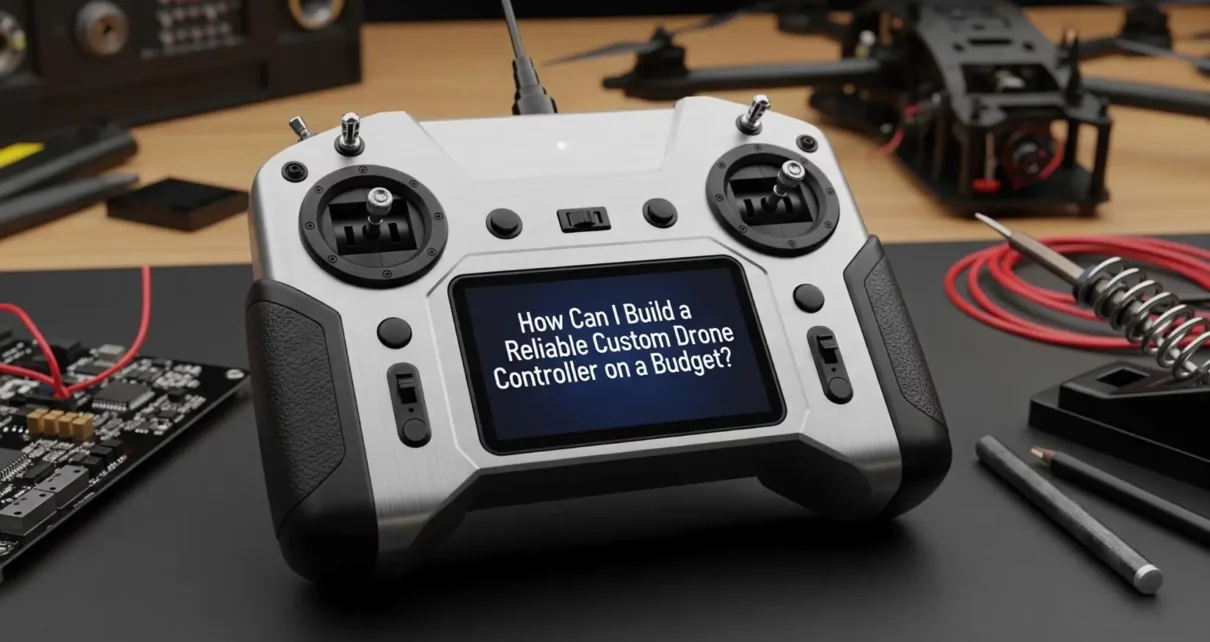
Assembling your own drone controller is more of a project that should be in a well-equipped robotics laboratory, not on your kitchen table. But here’s the thing, it’s more achievable than most people think, even if you’re working with a modest budget and learning as you go. Thousands of hobbyists, makers have done exactly this, and the resources provided to the community today have made the learning curve much less steep than it was in the past.
Let’s walk through what it actually takes.
Start With a Clear Picture of What You Need
Notice what your controller should do before you purchase any one of the components.
- Do you have a small FPV racing quad in the air?
- A gimbaled camera platform required to be smooth and controlled?
- Stiff wing UAV long-range flight?
Demands vary across use cases in terms of processing power, latency and number of channels.
It is an excellent way to waste and fail to deliver, trying to design a universal controller in the first place. Select one particular project, design around the same, and scale up. This emphasis in itself will help you save money and frustration.
Select Your Microcontroller Wisely
The microcontroller is the core of any drone controller. To minimize cost, the STM32 family is a favorite – a powerful enough platform (capable of real-time flight control duties) and commonly supported, at a low cost. The STM32F4 or F7 series of boards are already used in hundreds of open-source flight controllers, and thus the open-source documentation is well-established.
Alternative Options
- Arduino-based solutions: Quite simple to work with on very basic applications but will be quickly limited in processing capabilities when it comes to anything complex.
- RP2040 (Raspberry Pi): To get more headroom without going to costly equipment, consider this chip, it performs far above its cost.
The trick is to ensure that you have your hardware to suit your real needs. Additional processing power that is not needed simply translates to additional money and increased complexity.
Sensors, Signals and the Stuff in Between
It is not only about the brain but also about how cleanly it perceives the world and converts the same into outputs.
Essential Components
- IMU (Inertial Measurement Unit): At least some sense of acceleration and gyroscopic motion will be required. The MPU-6050 is more or less a rite of passage in a low-cost build.
- Barometer: You may require a BMP280 or other barometric altitude hold; add it.
- Radio Communication: It is here that many budget builders save money but will spend it eventually in the range of problems or the noise. Invest a bit more here. ExpressLRS is now the standard of low-cost long-distance RC connections.
The Importance of Wiring
One thing that often gets overlooked until it causes problems: your wiring harnesses. Sloppy wiring will create noise, generate interference with your sensors and worst of all, give you intermittent shorts.
- Plan your cable routing.
- Select current loads with suitable gauge wire.
- Maintain power and signal line separation where feasible.
It is a boring task, but the difference between a controller that works and an “almost works” controller is that.
PCB vs. Breadboard – When to Make the Jump
A breadboard will do well in prototyping. However, when you want to build something that you actually want to fly over and over again, then you will want a proper PCB sooner or later. Breadboard contacts are vibratory, and drone vibration is violent.
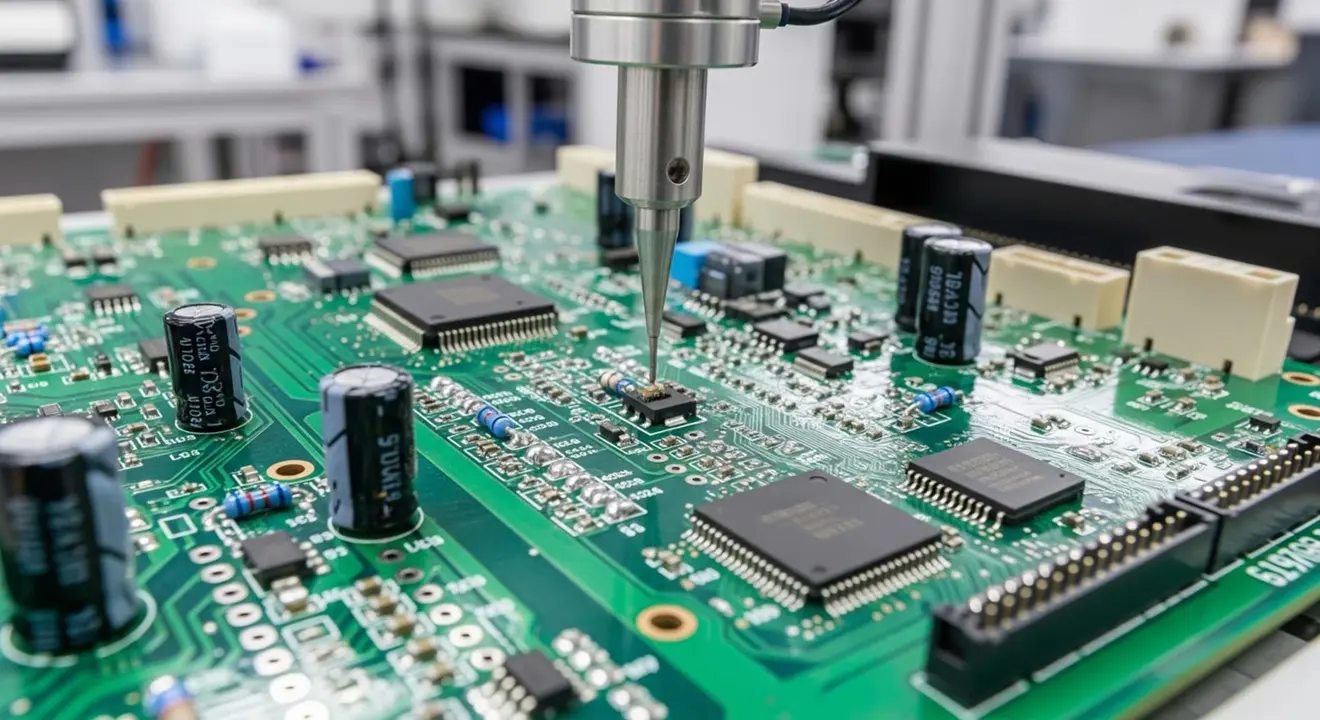
Having a custom PCB fabricated has previously been expensive because of barriers to entry, but small-volume production by overseas assembly firms has become truly affordable. Services that specialize in PCB assembly Romania, for example, offer competitive pricing on low-volume runs with reasonable turnaround times – worth exploring once your design is stable and tested.
Best Practices:
- Design your schematic in KiCad (free, powerful and well supported).
- Run your design rule checks attentively.
- Order a small batch of five or ten boards to begin with.
It is irritating to come across a mistake on a breadboard prototype. It is costly to find out after ordering 50 PCBs.
Firmware: Don’t Reinvent the Wheel
It would be an admirable thing to write flight control firmware yourself, however, this is also a multi-month rabbit hole that will postpone your real project. In the vast majority of custom controllers, it is wiser to begin with an existing open-source stack and then build on top of it:
- Betaflight
- ArduPilot
- PX4
These platforms are in the thousands of hours of real-world testing. You obtain a working base and then invest your effort in the customer features that provide actual distinction to your project.
Sourcing Components Without Getting Burned
Budget building implies intelligent sourcing. Components from AliExpress and LCSC are common, though you need to consider lead times and ensure you are obtaining authentic components, especially with sensors and voltage regulators where counterfeit components are often used.
In more serious aspects of your design, particularly when you are to go into a small production run, it is worth researching to find special electronic manufacturers. Some builders working on more refined designs have found that providers focused on PCB manufacturing Lithuania offer strong quality control at competitive price points compared to larger, more generic suppliers. It is always worth inquiring about getting samples before placing a full order.
Putting It Together
The thing is this: your initial custom controller will not be ideal. It may be grounded; it may have a sensor placement problem or can be a firmware quirk that can be hard to diagnose. It is all natural, and it is the way you get to learn.
- Allow some rounds of iteration.
- Remember to be simple with your initial designs.
- Write it all down: your schematics, your component selection, your test results.
In the future you will be grateful. It is quite possible to build a drone controller at a low cost. It is a matter of patience, a little planning and not minding taking a plunge into issues as they arise. However, that feeling is really tough to beat when you are flying something of your own design using your hand-built controller.
Explore Essential Drone Sensors for Precise Flight Navigation
Enhance Your Robotics Prototyping and Documentation Workflow
What Makes Overseas PCB Services Cost-Effective for Small Businesses