The modern high-paced innovation environment is putting more pressure on robotics engineers to produce new prototypes as soon as possible and write about their work in an efficient manner. It is no longer the case that prototyping robotic systems and their exemplary documentation take months or even years. Emerging technologies and streamlined workflows significantly contribute to facilitating both areas and ultimately enhancing a faster, as well as far more innovative, engineering process.
This article explores how high-tech robotics teams accelerate and improve prototyping and documentation without compromising quality or clarity. In the process, it illuminates the helpful tools and strategies that allow translating ideas into action with reduced hustles.
Adoption of Rapid Prototyping Tools and Techniques
The core idea in accelerating the prototyping process is the use of modern tools that reduce the amount of manual labor and time spent on the iteration process. Prototyping once required extensive custom machining and assembly, but digital fabrication and modular components are now transforming the entire process.
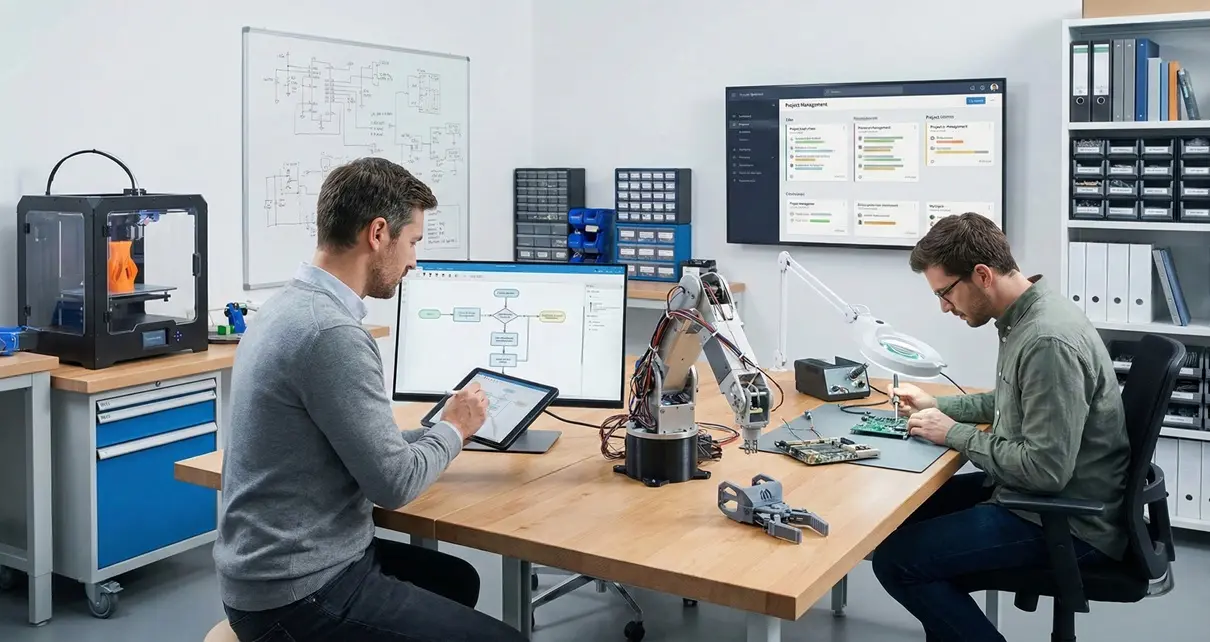
Robotics engineers are using 3D printing to create complex geometrical mechanical components in a rapid fashion. This enables live testing of form, fit and functionality in teams reducing feedback cycles. With 3D printing, CNC machining and laser cutting offer other solutions to strong or specialized parts, which usually supplements additive manufacturing techniques.
In addition to fabrication, modular robotics platforms and off-the-shelf components allow less design of parts that must be created individually. These encompass programmable microcontrollers, sensor modules, and motor controllers that are plug and play units and leave the engineers to concentrate on innovation as opposed to the simple hardware.
The assembly of the prototype can be sometimes held up by electrical connectivity. It is here that cable assembly solutions providers come in. They provide standard or bespoke cable assemblies that save time on wiring and also minimize integration efforts and enable engineers to debug multi-component robotic systems far quicker.
Using Software and Simulation to Facilitate Development
Software tools have transformed prototyping by allowing engineers to model and simulate their designs before assembling them physically. CAD (Computer-Aided Design) software gives accurate visualization and tolerances that assist in preventing expensive physical mistakes.
Better simulation environments enable the live testing of robot kinematics, control algorithms and sensor interactions within a virtual environment. This approach allows engineers to diagnose and address performance problems at the earliest stage. Some platforms even support hardware-in-the-loop simulation, which engineers use to bridge physical and digital prototypes and complete full validation.
Version control systems and integrated development environments (IDEs) structure the code and enable robotics teams to collaborate, accelerating software-side testing that often runs in parallel with hardware prototyping.
Streamlining Documentation with Smart Tools
Documentation is essential for knowledge transfer, maintenance and compliance, but it can be a tiresome and time-consuming process, particularly where engineers are impatient to begin work on the next prototype.
Contemporary engineers choose the documentation strategies, which are seamlessly incorporated into the flow of prototyping. Online documentation systems enable live updates and participation to keep records up to date without any unnecessary administration.
New AI-driven solutions provide an additional boost to the process. As an example, an AI image generator can create readable and customized visual assets like schematics or interface mockups, without the need to hire a specific graphic designer to create such assets. Prompt engineering the image generator with precise, component-level keywords lets the AI instantly deliver schematics that match the exact specs of each prototype.
In the meantime, AI sticker generator can be used to automate the production of labels, icons, and tags to be used in wiring identification, marking parts, or user manuals. Such visual aids make assembly and functioning easier and the paperwork becomes more extensive.
Collaborative Platforms and Agile Workflows
The effectiveness of team communication and coordination is also important in accelerating prototyping and documentation. Agile techniques have been applied in robotics engineering to structure work into focused and brief cycles.
Working with shared project management tools enables members of a team to monitor tasks, milestones, and feedback effectively. The engineers are able to post the CAD files, simulation outputs and documentation snippets on central systems that are available to both peers and stakeholders.
These open work processes minimize redundancy, simplify reviewing and expedite decision making all of which will translate into quicker project turnover.
Practical Tips from the Field
Robotics engineers working on the rapid prototyping and documentation are often familiar with the following insights:
- Using choices of modular parts and push-pull faces for ease of component interchangeability is useful for changeups.
- Automate as much as you can even with the code testing or documentation updates.
- Keep all the project data in one source of truth so that there are no confusion and loss of old files.
- Visualization tools should be used extensively as images are more effective than words when describing complex robotic mechanisms.
- Invest in cross-disciplinary skills, which incorporate mechanical, electrical, and software to cause less handoff delays.
Conclusion: Innovate Faster, Document Smarter
Speed and precision are the chief ingredients of modern robotics engineering. With the use of fast fabrication techniques, potent simulations, intelligent documentation systems and quick teamwork, engineers can create prototypes rapidly without compromising readability and detail.
In robotics, what do you consider to be the tools or techniques that you simply cannot do without in order to make your projects run faster? You can share your experience or questions below, and we all should contribute to robotics with our innovation and learning.
What is a Sensor? Types of Sensors, Classification & Applications
IOT Based Air Quality Monitoring System with ESP32 & BME680 Sensor
Explore Essential Drone Sensors for Precise Flight Navigation